


Best Natural Supplements for Joint Pain Over 40

The Best Natural Supplements for Joint Pain Over 40 — A Chiropractor's Working List
Joint pain after 40 rarely announces itself as pain. It shows up as "I can't squat to weed the tomato bed anymore," or "I stopped jogging because my knees feel like they belong to somebody else." In 40 years of practice in Elberta, Alabama, I have heard those two sentences more times than I can count, almost always from patients who would never describe themselves as being in pain — only stiff, only slower, only older.
This article is the short list I hand out at the front desk. It is for the person who has already tried a generic glucosamine bottle, felt nothing, and now wants to know which natural supplements for joint pain are worth the shelf space. No hype. Just what I have watched work.
Why joint pain over 40 needs a different supplement stack than joint pain at 25
A 25-year-old with a sore knee usually has an inflamed soft tissue and a healthy repair signal. Give the joint rest and decent sleep and the body sorts it out. By the time we hit 40, three things have quietly shifted. Cartilage surfaces have lost proteoglycan content — less of the water-binding cushion that lets cartilage glide under load. Cumulative low-grade inflammation has crept up; cytokines like IL-6 and TNF-alpha sit higher at baseline, so any new insult takes longer to clear. And gastric acid output has begun to fall, blunting mineral absorption and protein handoff for collagen synthesis.
The practical effect is that joint pain over 40 does not respond to the same supplements a 25-year-old's joint pain would. You need an herbal anti-inflammatory that downshifts the inflammatory cascade, plus structural raw material the older gut can absorb. The NIH NCCIH overview of joint pain supplements is a reasonable starting reference. My short list narrows it down to what I have seen move the needle.
The four natural supplements for joint pain my patients respond to
I have walked through dozens of compounds over four decades. Four keep earning their place because patients come back and tell me, unprompted, that something changed. This is the stack I build from: bioavailable curcumin, AKBA-standardized boswellia, marine omega-3 EPA/DHA, and a collagen-plus-glucosamine pair. The order matters less than the form. Form is where most people get it wrong.
1. Bioavailable curcumin (turmeric)
Plain turmeric powder in a capsule is almost theater. Curcumin is poorly absorbed on its own — gut uptake is low and hepatic clearance is fast. The forms that actually reach the bloodstream are piperine-paired curcumin, phospholipid-complex curcumin (the phytosome form), and liposomal preparations. A 2016 PubMed meta-analysis on curcumin for osteoarthritis found meaningful symptom reduction across multiple randomized trials when bioavailable forms were used. In my clinical experience, patients who switch from a $12 turmeric bottle to a properly formulated curcumin notice a difference inside two to three weeks. The ones who stay on the cheap version conclude turmeric is hype.
2. Boswellia serrata (AKBA-standardized)
Boswellia is the herbal anti-inflammatory I reach for when curcumin alone is not enough. Its active constituents — particularly acetyl-11-keto-beta-boswellic acid, or AKBA — inhibit 5-lipoxygenase, an enzyme upstream of leukotriene production. That is a different inflammatory pathway than the COX pathway most over-the-counter anti-inflammatories address, which is why boswellia often helps people whose pain has not budged on NSAIDs. The cheap boswellia capsules at the supermarket are usually not standardized to AKBA content. The ones that are, work. Patients often report less morning stiffness within three to four weeks. My boswellia capsule lineup is what I keep stocked.
3. Marine-source omega-3 EPA/DHA
EPA and DHA shift eicosanoid production away from the pro-inflammatory arachidonic acid pathway toward resolvins and protectins, which actively help close out inflammation rather than only suppress it. Plant-source omega-3 (ALA from flax) converts to EPA at a single-digit rate in most adults over 40, so marine sources do the real work. Look for a combined EPA+DHA of at least 1,500 mg daily, and a third-party purity certificate for heavy metals.
4. Collagen + glucosamine — the structural pair
Curcumin and boswellia handle the inflammation side. Collagen peptides and glucosamine sulfate give the joint raw material to rebuild its matrix. Hydrolyzed type II collagen at 10 to 15 grams daily, paired with glucosamine sulfate (not the cheaper hydrochloride form), is the combination I see hold up best in older joints. This is the part of the stack you have to commit to for two to three months before judging it.
The patients who get the strongest response are the ones who run all four for at least eight weeks before deciding whether natural supplements for stiff joints are going to be enough. The ones who give up at week three never find out what their joints could have done.
The one supplement most people waste money on
MSM in isolation. Methylsulfonylmethane gets sold as a standalone joint capsule at almost every pharmacy chain, usually in 1,000 to 1,500 mg doses, and patients buy bottle after bottle of it expecting results. In four decades of watching, I have never seen MSM alone produce a meaningful change in a patient's joint pain. The studies that do show benefit almost always pair MSM with glucosamine, chondroitin, or curcumin — meaning MSM may have a supporting role inside a stack, but it is not a lead actor. The same logic applies to standalone shark cartilage capsules, and to topical CBD rubs without a real anti-inflammatory carrier. If a product asks you to pay a premium for one ingredient that has only ever shown benefit inside a combination, you are paying for the marketing.
What to do if you want a single capsule instead of four bottles
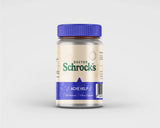
Most patients do not want to manage four separate supplements with four separate dose timings. That is why I built the consolidated formulas. Ache Help capsules bring together a bioavailable curcumin, an AKBA-standardized boswellia, and a few supporting botanicals in a once-daily dose — the format I hand to a patient starting from scratch who wants to feel a change inside the first month. The Pain Freedom Protocol bundle layers in the structural pair — collagen and glucosamine — for patients whose joint surfaces look like they need rebuilding raw material as much as inflammation control. If neither fits, the broader pain and inflammation collection has the individual components so you can build the stack yourself.
The bottom line
Joint pain over 40 is rarely one problem. It is usually low-grade inflammation, plus thinning cartilage, plus a gut that absorbs less than it used to. The natural supplements for joint pain that actually move the needle address all three: bioavailable curcumin and AKBA-standardized boswellia for the inflammatory side, marine omega-3 for eicosanoid balance, and collagen plus glucosamine for structural raw material. Give the stack eight weeks before you judge it. In my clinical experience, that is the window where the people who were going to respond, respond — and the ones who were not, find out early enough to ask a different question.