
4.3/5 Trustpilot
“Off Cymbalta after 11 years.”
“60 days on Ache Help paired with Pain Blend topically and I’m off both prescriptions with my doctor’s blessing.”
James R.

First order, on us
Doctor-formulated supplements built from forty years of clinical practice. Sign up for the Dr. Schrock's Journal and get your discount code instantly.
No spam. Unsubscribe anytime. Clinical guides & product notes only.
You're in
Apply at checkout for 10% off any order. We've also emailed it for safekeeping.
Start shopping → Free Shipping on all US orders over $75
 30-day satisfaction guarantee
 Doctor-formulated since 1990

Popular searches
Trending products
Shop by Ingredient · Peppermint Oil · 5 formulas
The cooling, clarifying oil with serious clinical credentials. Peppermint oil acts on TRPM8 cold receptors and has the only FDA-noted essential-oil data for IBS — doctor-formulated for digestion, headache relief, and mental focus.

Curated by
Dr. Daniel Schrock, DC — 40 years of clinical practice
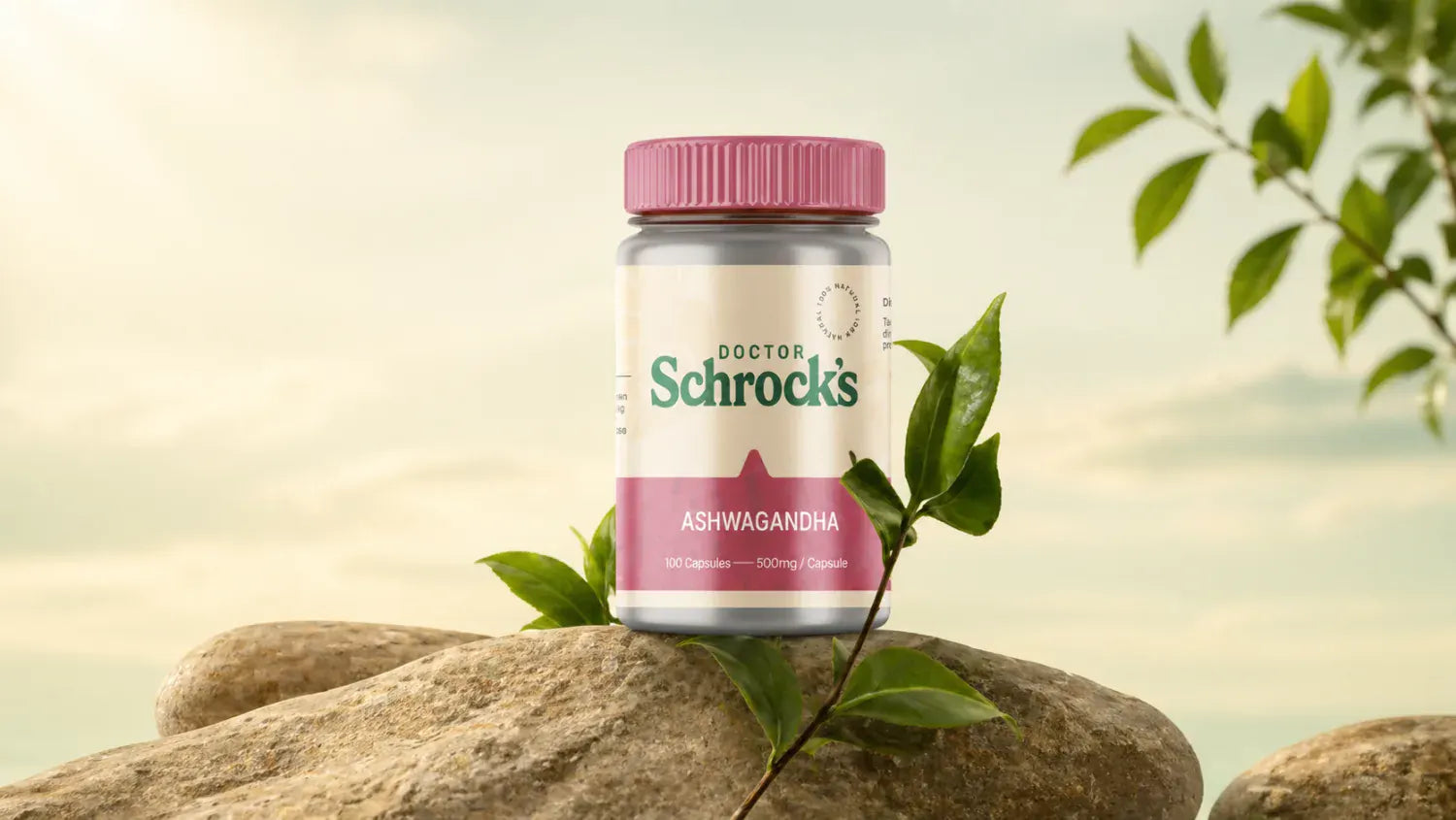
Peppermint sits at a different place on the essential-oils shelf than most of its neighbors. Enteric-coated peppermint oil has been studied in dozens of controlled trials for irritable bowel syndrome — to the point that even the conventional medical literature acknowledges the data. The active compound, menthol, is the reason: it relaxes intestinal smooth muscle, calms visceral pain receptors, and acts on TRPM8 cold receptors throughout the body to produce its signature cooling effect.
That same TRPM8 mechanism is why peppermint is so effective topically for tension headaches and muscle aches — a diluted dab on the temples or neck delivers measurable relief in clinical studies. The catch is concentration. Peppermint is a hot oil; it must be diluted properly. Used the right way, it is one of the few essential oils that genuinely earns its reputation for clinical-grade utility.
Essential oils are concentrated plant extracts and should be used carefully. Always dilute peppermint before applying to skin and avoid contact with eyes and mucous membranes. Not for use with infants. These products are not intended to diagnose, treat, cure, or prevent any disease. Consult your healthcare provider before use during pregnancy or alongside prescription medication.
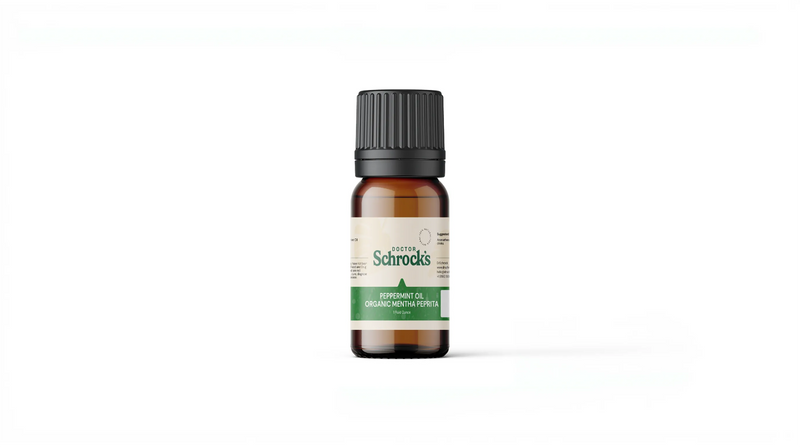
Steam-distilled Mentha × piperita with a high natural menthol content — third-party tested for purity and potency. The clinically validated peppermint Dr. Schrock has reached for over four decades for tension headaches, muscle aches, and digestive support.
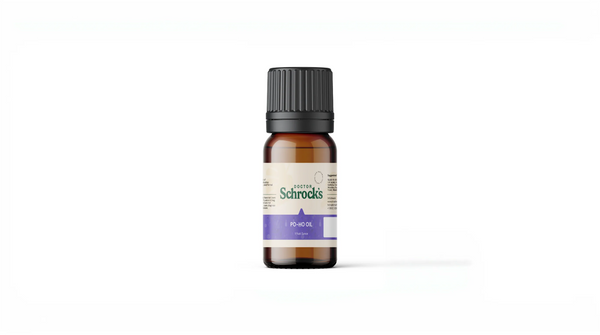 16% Off
Po-Ho cooling blend — fast tension headache & sinus relief.
$24.99
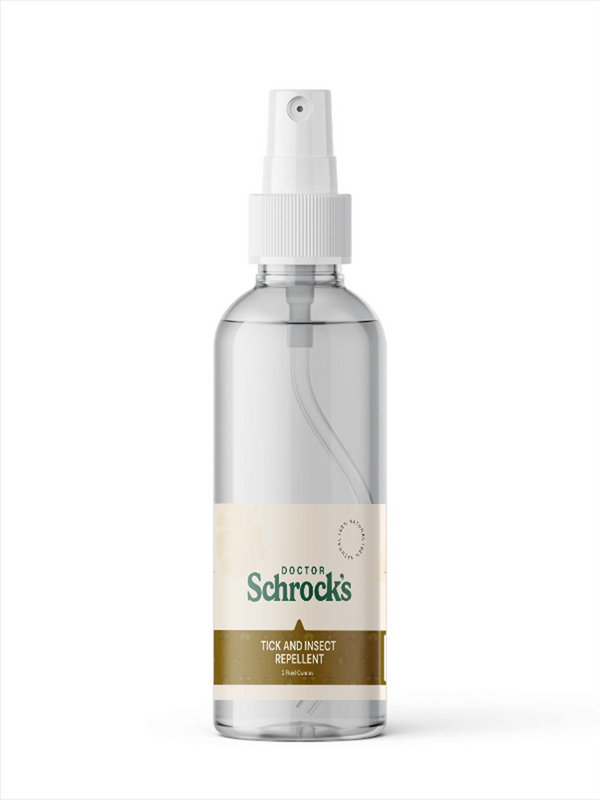 6% Off
DEET-free Citronella, Tea Tree & Peppermint tick and insect spray.
$13.99
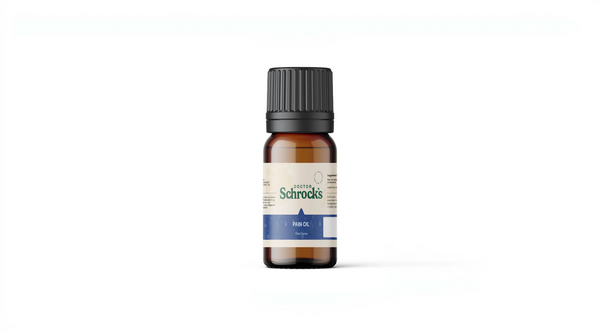 17% Off
Topical blend for muscle tension and joint flare-ups.
$32.99
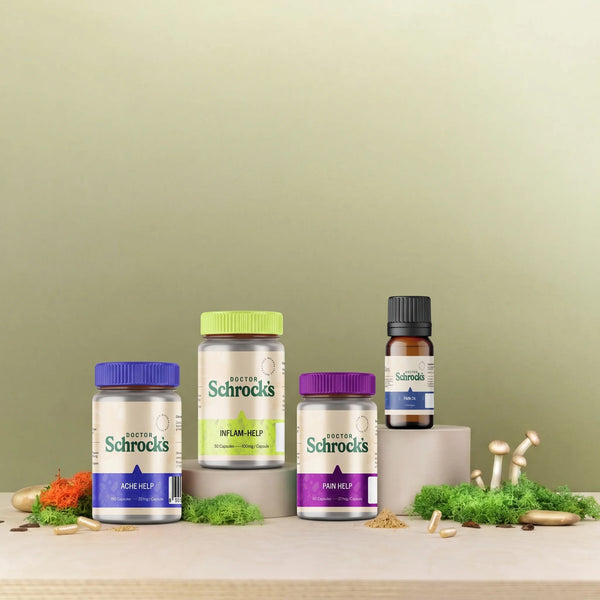 26% Off
4-product Pain Freedom bundle — save $29.97 on the full protocol.
$84.99
 16% Off
Pure Peppermint oil — menthol for headaches, sinuses & muscle cooling.
$14.99
Peppermint oil is not just a refreshing scent. Menthol's interaction with cold receptors and smooth-muscle tissue gives it a measurable clinical footprint — across digestion, pain, and cognition.
Menthol activates TRPM8, the body's cold-sensing receptor. That is the source of peppermint's signature cooling effect — and it does meaningful work on inflamed tissue and overstimulated pain pathways.
Enteric-coated peppermint oil has the strongest clinical evidence of any essential oil for IBS — relaxing intestinal smooth muscle and calming visceral hypersensitivity. Even conventional medical guidance acknowledges the data.
Diluted peppermint applied to the temples and neck is clinically validated for tension headaches. The same approach helps with localized muscle aches and post-workout tightness.
Peppermint inhalation acutely increases alertness and cognitive performance in controlled studies — making it a useful afternoon or pre-work diffuser oil.
Peppermint shines as the topical anchor of a broader pain protocol. Stacked with our anti-inflammatory capsules and pain relief oil blend, it covers tension and inflammation from two sides at once.
Bundle price
$59.95
$71.37separate
Dr. Daniel Schrock
Doctor of Chiropractic | Licensed since 1990
I am skeptical of essential-oil claims that aren't grounded in clinical literature, and peppermint is a rare oil that meets the bar. Enteric-coated peppermint capsules have been studied for irritable bowel syndrome in controlled trials for more than three decades — to the point that the data is acknowledged in mainstream gastroenterology guidance. The topical headache evidence is nearly as strong.
The key with peppermint is respect for concentration. It is a hot oil — undiluted application stings and can sensitize the skin. Diluted properly (1–3 percent in a carrier oil), it is one of the most genuinely useful oils I keep on hand. Avoid use with infants and small children, and keep it away from the face on anyone under five.
From verified buyers in this collection
“60 days on Ache Help paired with Pain Blend topically and I’m off both prescriptions with my doctor’s blessing.”
James R.
“30 days in and I can grip a coffee cup at 6am without warming up first. Subscribing forever.”
Margaret S.
“I’m a strength coach. I’ve put 20+ clients on Inflam-Help Daily — recovery times noticeably faster across the board.”
Tony L.
Peppermint is a hot oil — keep dilution to 1–3 percent for adults, which is roughly 6–18 drops per 1 ounce (30 ml) of carrier oil like fractionated coconut, jojoba, or sweet almond. Patch-test before broader use. Avoid eyes, mucous membranes, and broken skin.
Yes — this is one of peppermint's most clinically validated uses. Dilute to 2–3 percent in a carrier oil and apply a small amount to the temples, hairline, and back of the neck. Avoid the area immediately around the eyes. Most people feel relief within 15–30 minutes.
For digestive support, the clinical evidence is specifically for enteric-coated peppermint oil capsules — not for swallowing essential oil directly. Enteric coating allows the oil to bypass the stomach and reach the intestines, where it works on smooth muscle. Topical application to the abdomen (well diluted) provides comfort but does not replace the capsule form.
Avoid use with infants under 30 months — the menthol can trigger respiratory reflexes in very young children. For older kids, use only at 0.5 percent dilution, keep it away from the face, and never apply near the nostrils. Diffusion in a well-ventilated room is generally fine for older children.
Yes — peppermint relaxes the lower esophageal sphincter, which can worsen acid reflux and GERD. If you have heartburn or known GERD, skip peppermint capsules (and ingested peppermint generally) and choose topical or diffuser use only. Always loop in your provider before adding it to a reflux regimen.
Dr. Schrock's clinical guide to using essential oils the right way — dilution charts, top five oils for the home, and what to skip. Forty years of practice, distilled.
No spam. No data selling. Unsubscribe any time. Dr. Schrock's promise.
Free shipping
On every US order over $75
60-day refund
No bottle return needed
Doctor-formulated
40 years of practice
Made in USA
GMP-certified facility


