


Boswellia for Inflammation: 40-Year Observation

Boswellia for Inflammation — A Doctor's 40-Year Observation From the Treatment Room
The first time I saw a boswellia bottle on a patient's nightstand was the late 1990s. The patient was a retired shrimper from Bon Secour, knees rebuilt twice, who had walked into my Elberta, Alabama clinic with a small brown capsule and the question every clinician hopes a patient will ask: "Doc, is this thing actually doing anything?" I told him honestly that I did not know yet. I had read the early Indian and German papers, but I had not watched it long enough to have a clinical opinion. Twenty-eight years later, I do.
What follows is not a research review and it is not a sales sheet. It is four decades of standing across a treatment table from people with stiff, swollen, inflamed joints — and watching, slowly, which supplements stayed in the cabinet and which got thrown out by month three. Boswellia stayed. Here is what I have observed, what I have stopped expecting, and what I look for on a label before I tell a patient it is worth trying.
What boswellia is — frankincense, in chemistry terms
Boswellia is the gum resin of trees in the Boswellia genus, harvested by scoring the bark and letting the sap weep, harden, and crystallize into the amber lumps that have been burned as incense for at least three thousand years. The frankincense in the Christmas story and the frankincense supplement on the shelf at a health food store come from the same family of trees — but the species used clinically is almost always Boswellia serrata, native to the dry hill country of central India.
The resin contains a class of compounds called boswellic acids. The one most researchers chase is AKBA — acetyl-11-keto-β-boswellic acid — because it is the most potent inhibitor of an enzyme called 5-lipoxygenase, or 5-LOX. 5-LOX is the gatekeeper of the leukotriene pathway, a branch of inflammatory signaling that NSAIDs do not touch. That single mechanistic difference is the reason boswellia keeps showing up in clinical literature. The NIH NCCIH on boswellia summary is a fair starting reference for the human trial picture so far.
Boswellia for inflammation: the mechanism that separates it from NSAIDs
The reason I keep recommending boswellia for inflammation, after four decades of trying nearly everything else first, is mechanistic. Ibuprofen, naproxen, and the rest of the over-the-counter anti-inflammatory shelf inhibit cyclooxygenase — COX-1 and COX-2 — which is one branch of the inflammatory tree. The other branch, the leukotriene branch, runs through 5-LOX. NSAIDs do nothing about it. Boswellic acids, and AKBA specifically, slow it down.
The practical consequence shows up in two places. First, in upper GI tolerance. Patients who cannot stay on daily ibuprofen because of stomach lining irritation or kidney concerns can almost always tolerate a properly standardized boswellia capsule at meal-times. Second, in the kind of inflammation that NSAIDs never quite quiet — the slow, low-grade, chronic joint-cartilage inflammation that smolders for years. The 2011 PubMed review of Boswellia serrata in osteoarthritis trials compiled the human data through that point; the pattern in the trials matches what I have watched in the office. This is not a fast painkiller. It is a slow downshift.
What I have watched boswellia do — across four decades
I want to be careful with words here, because I have spent forty years correcting people who think a supplement is a prescription. So let me describe what patients report, not what boswellia "does." Across four decades of watching, the most consistent boswellia serrata benefits I hear described in my office come from three patient categories. First, the patient with chronic morning joint stiffness — the one who needs ten minutes to get from the edge of the bed to the coffee pot. They tend to describe the morning window shrinking, not disappearing, somewhere between weeks four and eight.
Second, the patient with post-activity flare-ups — yard work on Saturday, sore knees through Tuesday. That recovery window often tightens. Third, the patient with low-grade systemic inflammation showing up as general body achiness with no single joint to blame. Those folks tend to report the most subjective improvement and often the most gradual. The honest timeline I give every new patient: do not judge boswellia at three weeks. Judge it at eight.
In four decades of watching patients try every joint supplement that hit the market, boswellia is one of the few I've kept telling people about — quietly, and only after they've ruled out the easier wins first.
What I have watched boswellia NOT do
This is the section I wish more supplement articles included. Boswellia is not a 48-hour painkiller. If a patient takes a capsule on Friday hoping to garden pain-free on Saturday, they are going to be disappointed and they are going to throw the bottle out by Wednesday. Boswellia does not replace movement — every patient who improved on it was also walking, stretching, or doing the rehab work I asked them to do. And boswellia does not undo joint damage. Cartilage that is already worn through stays worn through. Finally, some patients respond marginally or not at all. I'd estimate one in four sees no clear change. That is honest, and worth saying out loud.
AKBA boswellic acid: the label number that matters
This is where most generic bottles fail. A capsule labeled "boswellia 400 mg" tells you almost nothing — it could be raw resin powder with 30 percent boswellic acids and barely any AKBA, which is what cheap supplements default to. The AKBA boswellic acid fraction is the active marker, and the standardized extracts in the published trials — formulations like 5-Loxin and Aflapin — are concentrated to deliver a meaningful AKBA dose per capsule. Look on the label for both total boswellic acids (ideally 65 percent or higher) and an explicit AKBA percentage (10 percent or higher, with 30 percent being the high-quality benchmark). If the label doesn't disclose AKBA at all, assume the bottle is not what the studies tested. The capsules in our boswellia capsule collection are screened to that standardization level before I send a patient out the door with one.
How I see patients use boswellia in practice
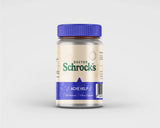
Two patterns work in my office. The first is standalone boswellia, taken with a meal, for the patient who already has curcumin or omega-3 in rotation and wants a targeted 5-LOX downshift. The second is a combination formula pairing boswellia with curcumin, because the two compounds hit complementary branches of the inflammatory cascade — boswellia on the leukotriene side, curcumin on the prostaglandin side. That synergy is the reason our Inflam Help anti-inflammatory formula pairs them at clinically tested ratios, and why patients with broader joint complaints often end up on Ache Help joint support, which layers in collagen substrate alongside the herbal anti-inflammatory pair.
Who I tell to be careful
Boswellia is well-tolerated in the published trials and in four decades of office observation, but I still flag two groups. Patients on blood thinners — warfarin, apixaban, clopidogrel — should clear any new herbal anti-inflammatory with their prescribing physician, because the leukotriene pathway brushes against platelet behavior. Pregnant or nursing patients should not use boswellia at clinical doses. And any patient about to undergo surgery should pause boswellia two weeks ahead. These are not boswellia-specific cautions so much as standard practice with any potent botanical, but they are worth saying.
The bottom line
Boswellia is not a miracle. It is a slow, well-tolerated, mechanistically distinct anti-inflammatory that, in the right patient and at the right standardization, quietly earns its place in a long-term joint protocol. Forty years of watching has not made me a believer in much. Boswellia is one of the few that stayed on the short list. If you have ruled out the easy wins and you want to try it correctly, start with a properly standardized AKBA capsule and give it eight weeks before you decide.