


Lion's Mane Mushroom: Brain Fog, Memory, and Timing

Lion's Mane Mushroom for Brain Fog and Memory — and Why the Hour You Take It Matters
The patients who walk into my Elberta, Alabama office asking about lion's mane almost never call it brain fog. They say they walked into a room and forgot why. They say a coworker's name sat behind their teeth for twenty seconds before it dropped. They say the second cup of coffee no longer does what the first one used to do, and that the third cup just makes their hands shake. After 40 years of practice on the Gulf Coast, I can tell you the search for "lion's mane for brain fog" is rarely about an exotic mushroom. It is about a person who has noticed their own slowing down and wants something to push back without a prescription.
This is the conversation I would have with you in the office. What the mushroom actually is, what the credible research says, what dose and form to look for, and — the part most articles skip — when to take it, because timing is where most people accidentally throw the bottle in a drawer after three weeks.
What lion's mane actually is — and what NGF has to do with memory
Lion's mane is the common name for Hericium erinaceus, a white, cascading mushroom that grows on hardwood and looks, fairly, like a small lion's mane. It belongs to a small category I call nootropic mushrooms — fungi with documented signaling effects on the central nervous system, distinct from the immune-modulating stack (reishi, turkey tail, chaga) and the energy-leaning stack (cordyceps). Two molecules drive most of the interest. Hericenones, found in the fruiting body, and erinacines, found in the mycelium, both appear to upregulate nerve growth factor in lab and animal models. NGF is a protein your brain uses to keep neurons healthy and to encourage new dendritic branching — the wiring side of memory.
None of this means swallowing a capsule injects NGF into your skull. It means the compounds appear to nudge the cascade that produces it, slowly, over weeks. Examine.com's lion's mane page keeps a sober summary of the human and animal literature, and I recommend it as a sanity check before you read any supplement marketing.
Lion's mane for brain fog — the dose and form that move the needle
This is where most bottles fail before the patient ever opens them. Raw lion's mane powder, the cheap stuff blended into coffee creamer, is largely indigestible chitin. The active compounds are locked behind a fungal cell wall the human gut cannot crack on its own. What you want is a hot-water extract, ideally a dual extract (water plus ethanol), standardized to beta-glucan content rather than the meaningless "polysaccharide" number that includes filler starch. A real dual extract will list beta-glucans at 20 to 30 percent and will not hide behind a proprietary blend.
The dose range I see clinically useful sits between 1,000 and 3,000 mg per day of extract — not raw mushroom. The most-cited human trial, Mori 2009, used 250 mg of a 96 percent Hericium dry powder, three times daily for 16 weeks, in older adults with mild cognitive impairment, and showed improvement on cognitive function scales during dosing that faded after cessation. You can read the abstract in the PubMed clinical study on lion's mane and mild cognitive impairment. The study is small and worth reading critically, but it set the dosing reference point most clinicians still use.
When to take lion's mane — morning versus evening matters
The question of when to take lion's mane comes up in nearly every office conversation, and the answer in my practice has been remarkably consistent. Lion's mane leans cognitively activating. Patients who take it in the morning, ideally within the first hour after waking and with a small amount of fat to help carry the lipid-soluble compounds, are the ones who report a usable difference in afternoon focus and word retrieval by week three or four. Patients who take it at 9 p.m. with their other supplements often report two things — either they feel nothing because they forgot it half the nights, or they feel a low-grade wake-up effect that nudged their sleep latency in the wrong direction. Neither outcome is what we want.
From four decades of office reports
Across four decades, the most common "this changed my morning" reports I've gotten about lion's mane came from patients who moved their dose to the first hour after waking — not the night-stand bottle they kept forgetting.
What to expect by week four — and what's not a "lion's mane" result
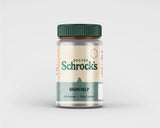
Lion's mane is a slow-build compound. NGF cascades take weeks, not hours. The patients who do best are the ones I warn ahead of time that they will likely feel nothing measurable for the first two weeks. By week three to four, the reports I hear, almost word for word, are: "Names come back faster." "I finished a project without three tabs of distraction." "The fog in the first hour of the morning lifted." Lion's mane memory effects, when they show up, tend to be in word retrieval and short-term recall — the slippery edges of cognition that age touches first. Our Brain Help nootropic capsules are formulated around this dose-and-form principle: dual-extract material, morning-friendly stack, no caffeine padding.
What lion's mane will not do, in my hands, is replace sleep — a fogged brain on five hours of sleep is still a fogged brain. It will not act like a stimulant; if you want a 30-minute kick, this is the wrong shelf. It will not reverse dementia, and any marketing that suggests it does should make you put the bottle back. Patients report sharper edges, not new brains.
Stacking lion's mane with sleep and cognition support
The single most common reason a lion's mane trial fails in my office is that the patient is sleep-deprived and we are asking a nerve-growth compound to outrun a glymphatic-clearance problem. The brain does its overnight cleanup during deep sleep, and no nootropic mushroom outperforms a real seven hours. If brain fog tracks with broken sleep — waking at 3 a.m., shallow nights, racing mind at lights-out — I move Snooze Help for sleep-driven cognition in first and add lion's mane on top once the sleep floor is solid. For patients who want to see the broader stack I pull from, the brain and mental clarity collection is the in-house short list, organized by mechanism rather than marketing.
The bottom line
Lion's mane is one of the few nootropic mushrooms with both a plausible mechanism and a small body of human data behind it. Use a hot-water dual extract standardized to beta-glucans, dose 1,000 to 3,000 mg in the morning, give it four weeks before judging, and fix sleep underneath it. That is the protocol I run in office, and it is the same one built into our Brain Help nootropic capsules. If you want the rest of the cognition shelf, the brain and mental clarity collection is where I would send you next.