


Why Your Turmeric Supplement Isn't Working

You took turmeric for six weeks. Maybe eight. Your knees still ache when you stand up from the porch chair, your shoulder still grinds when you reach for the top shelf, and the bottle on your kitchen counter is half empty with nothing to show for it. Before you write turmeric off, flip the bottle over. In my 40 years of practice in Elberta, Alabama, I have watched more patients give up on turmeric than almost any other supplement — and almost every time, the label tells me they were never going to feel a thing.
The issue is not that turmeric is overrated. The issue is that the molecule everyone actually wants from turmeric is famously hard for the human gut to absorb on its own. If your capsule does not address that, most of what you swallowed left your body without ever reaching your bloodstream. Here is how to tell the difference between a turmeric bottle that will help you and one that is just expensive yellow powder.
What turmeric actually is — and what curcumin is
Turmeric is the dried, ground rhizome of Curcuma longa, a relative of ginger. The rhizome itself contains hundreds of compounds, but only about 2 to 5 percent of raw turmeric powder by weight is the family of yellow pigments called curcuminoids — and the most studied of those is curcumin. When researchers talk about turmeric's effect on joint comfort, occasional inflammation, and post-exercise recovery, they are almost always talking about standardized curcumin, not the spice itself.
This matters for one practical reason: a capsule that says "turmeric root powder 500 mg" is giving you maybe 10 to 25 mg of actual curcuminoids. A capsule that says "turmeric extract standardized to 95% curcuminoids 500 mg" is giving you closer to 475 mg of the active compound. That is a thirty- to fifty-fold difference in the molecule that does the work, and it is the first place turmeric bioavailability quietly falls apart on the shelf. Same front-of-bottle number. Wildly different product.
Why most turmeric capsules don't absorb
Even when you get the high-percentage extract, curcumin has a second problem: it is one of the most poorly absorbed nutraceuticals in common use. Plain curcumin is fat-soluble, gets chewed up quickly by liver and gut enzymes, and is pushed back out before it can do anything systemically. Studies measuring blood levels after a single oral dose of unformulated curcumin routinely find the molecule at the edge of detection, even at gram-level doses. That is the curcumin absorption ceiling you keep reading about.
The classic fix is piperine, the active compound in black pepper. A frequently cited PubMed study on curcumin bioavailability with piperine reported that adding just 20 mg of piperine to a 2-gram dose of curcumin increased curcumin bioavailability by roughly 2,000 percent — about a twentyfold jump — in healthy adults. Newer formulations go further: phytosome carriers (the Meriva-style phospholipid complex) and patented forms like BCM-95 use natural turmeric oils and lecithin to drag curcumin across the gut wall intact. The point is the same. Bare curcumin alone is a near-miss. Curcumin with a carrier is a different supplement entirely.
Why your turmeric isn't working — three label red flags
When a patient tells me their turmeric supplement isn't working, I look for three things on the label before I look at anything else. If any one of them is present, that bottle was almost certainly not going to deliver a clinical dose, no matter how long they took it.
- No piperine and no black pepper extract. If the label does not list piperine, BioPerine, or black pepper fruit extract, and it also does not list a phospholipid or phytosome carrier, you are taking unassisted curcumin. The Examine.com curcumin absorption page walks through the same gap in plain language.
- No phospholipid, phytosome, or oil-based delivery. Look for words like "phytosome," "Meriva," "BCM-95," "lecithin complex," or "turmeric essential oil." These are the carrier systems that get curcumin past the gut wall when piperine is not used.
- "Turmeric root powder" with no curcuminoid percentage. If the bottle does not say "standardized to" with a percentage of curcuminoids (ideally 95%), assume you are buying the spice in capsule form. A teaspoon of turmeric from the grocery aisle is cheaper.
In four decades of practice, the most common reason a patient tells me "turmeric didn't do anything for me" is that they were taking unstandardized rhizome powder in a capsule with no carrier — same molecule on the label, almost none of it in the bloodstream.
What to take instead
The label on a turmeric bottle worth keeping looks like this: a curcumin extract standardized to 95 percent curcuminoids, paired with either black pepper extract (piperine or BioPerine, typically 5 to 20 mg) or a phospholipid carrier such as Meriva or BCM-95. A typical effective daily dose lands somewhere between 500 and 1,000 mg of the standardized extract, taken with a meal that contains some fat so the curcumin has something to ride along with.
If you want to skip the label hunt, the products in our bioavailable turmeric collection are pre-screened against those three red flags — every bottle in the collection pairs a standardized extract with a carrier and lists both on the front. For patients who tell me their discomfort is not just joint-related but also tied to broader, body-wide stiffness or post-exercise soreness, I more often reach for our Inflam Help anti-inflammatory blend, which combines a bioavailable curcumin with boswellia and ginger so they are not relying on a single botanical to do all the work.
How long to give the right turmeric before deciding
Even with the right formulation, turmeric is not an aspirin. Curcumin works upstream on inflammatory signaling pathways rather than blunting pain directly, and that biology takes weeks to show up in how a joint feels. I tell patients to give a properly formulated black pepper turmeric or phytosome curcumin a fair four to eight weeks at a full daily dose before deciding whether it is helping them. Two weeks is not enough information.
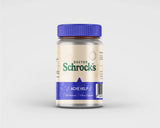
If you reach the eight-week mark on a label that checks all the boxes above and you still feel nothing meaningful, turmeric may simply not be your lever. That is the point where I usually walk a patient over to our Ache Help joint formula, which uses a different mechanism stack and tends to support patients whose discomfort is more mechanical than inflammatory.
The bottom line. Turmeric is not a weak supplement. Unassisted curcumin in a capsule is a weak delivery system. If your bottle does not show a standardized curcuminoid percentage and either a piperine or phospholipid carrier on the label, you are not really testing turmeric — you are testing turmeric's worst-case scenario. Swap the bottle, give it a fair eight weeks with food, and then judge it. If you want a shortcut past the label hunt, start with our bioavailable turmeric collection and work from there.